
Starlink explained: Everything you should know about Elon Musk's satellite internet venture
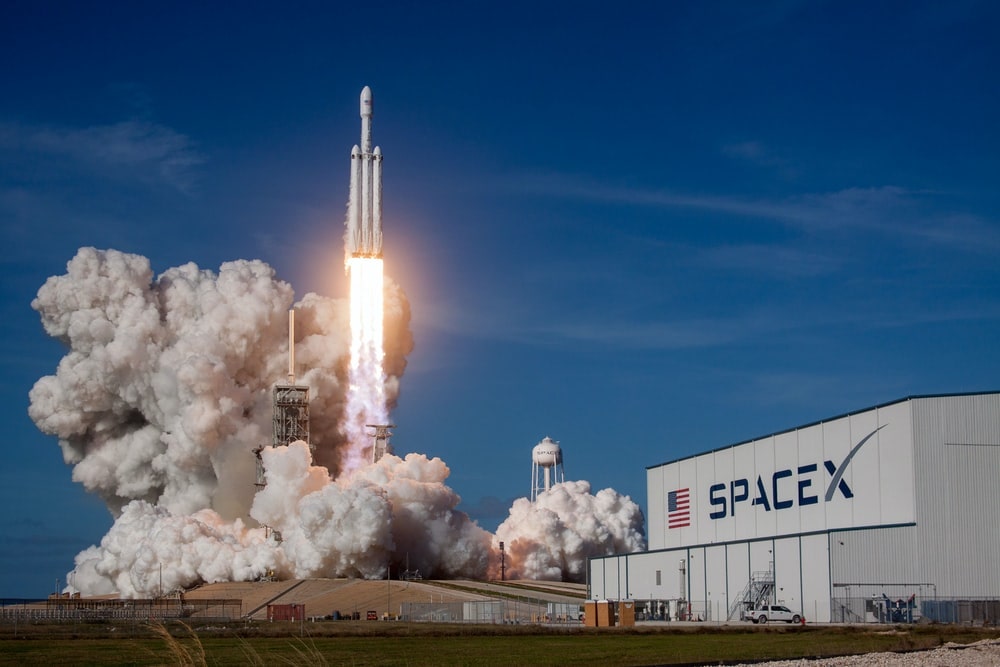
The billionaire SpaceX CEO is launching satellites into orbit and promising to deliver high-speed broadband internet to as many people as possible. Read more
When you think of billionaire entrepreneur Elon Musk, chances are good that you think of his electric car company Tesla, his space exploration venture SpaceX or his stint hosting Saturday Night Live (to say nothing of his history of stirring up controversy on social media or smoking weed with Joe Rogan). Maybe you just know him as one of the richest people on Earth.
Something you might be less familiar with is a venture called Starlink, which aims to sell internet connections to almost anyone on the planet, by way of a growing network of private satellites orbiting overhead.
After years of development within SpaceX -- and after securing nearly $885.5 million in grant funds from the Federal Communications Commission at the end of 2020 -- Starlink picked up the pace in 2021. In January, after three years' worth of successful launches, the project had surpassed 1,000 satellites delivered into orbit. One year and dozens of successful launches later, Starlink boasts nearly 2,000 functional satellites orbiting overhead.
Starlink's business is accelerating, as well. In February last year, Musk's company disclosed that Starlink was serving more than 10,000 customers. Now, after expanding preorders to even more potential customers, releasing a second-gen home internet satellite dish and exploring the possibility of providing in-flight Wi-Fi for passenger aircraft, Musk says that Starlink has shipped more than 100,000 satellite internet terminals to customers in 14 countries.
During a talk at Mobile World Congress in June, Musk told an audience that Starlink would be available worldwide (except at the North and South Poles) starting in August, though regional availability will depend on regulatory approval. In September, Musk tweeted that Starlink would exit its initial beta phase in October, which indicates that the service is continuing to ramp up and expand -- though the budding broadband provider faces a backlog of prospective customers waiting to receive equipment and start service.
Starlink isn't without its controversies. Members of the scientific community have raised concerns about the impact of Starlink's low-earth orbit satellites on night sky visibility. Meanwhile, satellite internet competitors including Viasat, HughesNet and Amazon's Project Kuiper have taken notice of Starlink's momentum, too, prompting regulatory jousting and attempts to slow Musk down.
We'll continue to monitor Starlink's progress in 2022. For now, here's everything you should know about it.
What is Starlink, exactly?
Technically a division within SpaceX, Starlink is also the name of the spaceflight company's growing network -- or "constellation" -- of orbital satellites. The development of that network began in 2015, with the first prototype satellites launched into orbit in 2018.
In the years since, SpaceX has deployed nearly 2,000 Starlink satellites into orbit across dozens of successful launches, the most recent of which took place on Feb. 3 and delivered another 49 satellites into orbit. That brings the total number of functional satellites in the constellation above 2,000, though some of those satellites are prototypes or nonoperational units that aren't functioning parts of the network.
And those satellites can connect my home to the internet?
That's the idea, yes.
Just like existing providers of satellite internet like HughesNet or Viasat, Starlink wants to sell internet access -- particularly to people in rural areas and other parts of the world who don't already have access to high-speed broadband.

"Starlink is ideally suited for areas of the globe where connectivity has typically been a challenge," the Starlink website reads. "Unbounded by traditional ground infrastructure, Starlink can deliver high-speed broadband internet to locations where access has been unreliable or completely unavailable."
All you need to do to make the connection is set up a small satellite dish at your home to receive the signal and pass the bandwidth on to your router. The company offers a number of mounting options for rooftops, yards and the exterior of your home. There's even a Starlink app for Android and iOS that uses augmented reality to help customers pick the best location and position for their receivers.
Starlink's service is only available in select regions in the US, Canada and abroad at this point, but the service now boasts more than 100,000 satellite terminals shipped to customers, and the coverage map will continue to grow as more satellites make their way into the constellation. Eventually, Starlink hopes to blanket the entire planet in a usable, high-speed Wi-Fi signal.
How fast is Starlink's internet service?
"Users can expect to see data speeds vary from 50 to 150 megabits per second and latency from 20 to 40 milliseconds in most locations over the next several months," Starlink's website says, while also warning of brief periods of no connectivity at all. "As we launch more satellites, install more ground stations and improve our networking software, data speed, latency and uptime will improve dramatically."
To that end, Musk tweeted in February of last year that he expects the service to double its top speeds to 300Mbps by the end of 2021. Now, in 2022, claims like those are difficult to evaluate, as speeds will vary depending on time and location.
Last year, CNET's John Kim signed up for the service at his home in California and recently began testing it out at a variety of locations. At home, he averaged download speeds around 78Mbps, and latency around 36ms. You can see more of his first impressions in the video posted above.
How much does Starlink cost?
Starlink is now accepting orders on a first-come, first-served basis, so you'll need to request service and then wait your way through the backlog. During its beta in 2021, Starlink said that some preorders could take as long as six months to fulfill. The cost of the service is billed at $99 per month, plus taxes and fees, plus an initial payment of $499 for the mountable satellite dish and router that you'll need to install at home.
$99 per month is a lot for an internet connection, especially one that isn't nearly as fast as a fiber connection, but Musk is betting that the cost will be worth it for people who have thus far lived without access to a reliably fast connection at all.
SpaceX President Gwynne Shotwell has said that she expects the $499 upfront cost of the receiver dish to come down in the coming years as SpaceX refines its dish design to lower production costs. The newest version of the dish, introduced with FCC approval in November, is smaller and less expensive to produce than the previous version, though customers will still need to pay an upfront fee of $499 to use it.
In April last year, Shotwell also said that Starlink wanted to keep pricing as simple and transparent as possible, and had no plans to introduce service tiers into the mix. However, that approach seems to be changing in 2022, with the introduction of a new premium tier with a scan array that's twice as big as the standard plan and with download speeds ranging from 150-500Mbps. That tier costs $500 per month, plus an initial payment of $2,500 for the equipment. Starlink is taking orders for that tier now, and plans to launch the service later in 2022.
Where is Starlink available?

Despite promising to blanket the entire globe in coverage by this fall, Starlink service is currently limited to select regions in select countries. Still, the coverage map will grow considerably as more satellites join the constellation.
Per Musk, the list of countries currently serviced by the growing network of low-earth orbit satellites includes the US, Canada, the UK, France, Germany, Austria, the Netherlands, Ireland, Belgium, Switzerland, Denmark, Portugal, Australia and New Zealand. Starlink's preorder agreement includes options for requesting service in other countries, too, including Italy, Poland, Spain and Chile.
There's still a ways to go -- Starlink will likely need at least 10,000 satellites in orbit before it can claim to offer full service to a majority of the globe (and SpaceX has shown signs that it wants as many as 42,000 satellites in the constellation). Right now, it's only about 20% of the way there, at best, with coverage focused on regions sitting between 45 and 53 degrees north latitude.
Still, Musk has been bullish about the Starlink timeline. During an interview at 2021's Mobile World Congress, Musk said that Starlink would hit worldwide availability except at the North and South Poles starting in August. Earlier in June, Shotwell expressed a similar sentiment, and said that Starlink would reach global serviceability sometime this fall.
"We've successfully deployed 1,800 or so satellites, and once all those satellites reach their operational orbit we will have continuous global coverage so that should be like [the] September time frame," she said.
In September, a Twitter user asked Musk when Starlink would finish its beta phase. "Next month," Musk replied.
According to the FCC, which recently added Starlink to its database of broadband providers, the service was available to 0.08% of Americans as of December 2020, when Starlink was just launching its beta. At that point, 100% of customers had access to max download speeds of 100Mbps and upload speeds of up to 10Mbps. Future FCC releases will give us a good look at how much the service grew during a busy 2021 -- we'll update this post when those releases arrive in 2022.
Why satellites, anyway? Isn't fiber faster?
Fiber, or internet delivered via ground-laid fiber-optic cable, offers upload and download speeds that are indeed much faster than satellite internet -- but, as companies like Google will tell you, there's nothing fast about deploying the infrastructure necessary to get fiber to people's homes. That's not to say that there's anything simple about shooting satellites into space, but with fewer sharp-elbowed competitors -- and with a lot less red tape to cut through -- there's every reason to believe that services like Starlink will reach the bulk of underserved communities long before fiber ever will. Recent FCC filings also suggest that Starlink could ultimately double as a dedicated phone service, too.
And don't forget that this is Elon Musk we're talking about. SpaceX is the only company on the planet with a landable, reusable rocket capable of delivering payload after payload into orbit. That's a mighty advantage in the commercial space race. On top of that, Musk said in 2018 that Starlink will help provide SpaceX with revenue needed to fund the company's long-held ambition to establish a base on Mars.
If that day arrives, it's also likely that SpaceX will try to establish a satellite constellation on the red planet, too. That means that Starlink customers are potentially doubling as guinea pigs for the Martian wireless networks of the future.
"If you send a million people to Mars, you better provide some way for them to communicate," Shotwell said in 2016, speaking about the company's long-term vision for Starlink. "I don't think the people who go to Mars are going to be satisfied with some terrible, old-fashioned radios. They'll want their iPhones or Androids on Mars."




Post a Comment
0 Comments